


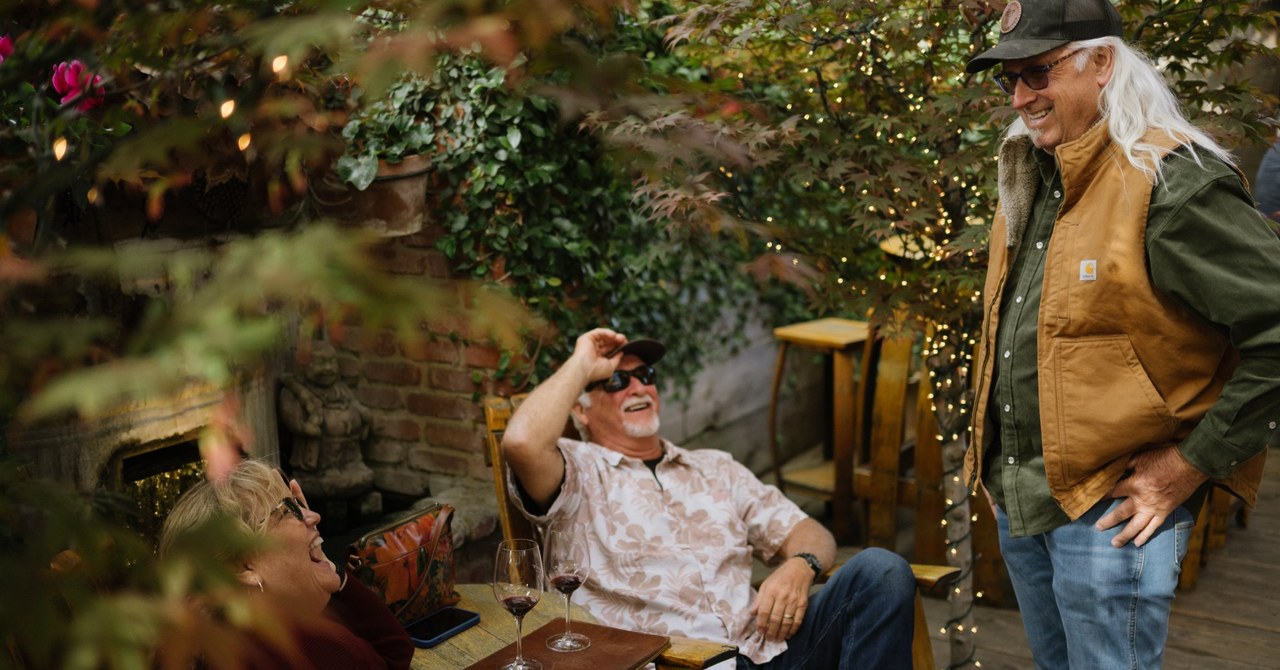
Here’s the day you’re actually after: two tasting rooms you took your time in, a real lunch somewhere in the middle, and a last glass somewhere good before you point the car home. That’s a great day in Santa Ynez wine country, and it’s completely doable.
What’s not doable is the version people try to book instead. Five wineries. A spreadsheet. A route timed to the minute that assumes every tasting takes exactly thirty and nobody lingers over the one they loved. Do that and you’ll spend the day rushing, half-tasting, and watching the clock, and you’ll drive home having seen plenty and remembered none of it.
The good version and the crammed version take about the same number of hours. One of them is worth the drive. This is how to plan the one that is.
The shape that works is simple, and it’s nearly the same every time: two tasting rooms, a sit-down lunch between them, and a glass somewhere good to finish before the drive back. Build the day around those four stops and you’ve got a day worth making.
The reason it’s four and not six comes down to how long the good parts actually take. A tasting you’re paying attention to runs forty-five minutes to an hour. That’s not slow, that’s the time it takes to sit down, work through a flight, ask a couple of questions, and not feel like you’re being processed through a line. Lunch should be a real one, sitting down, because tasting on an empty stomach is how a fun day turns into a short one. Add ten or fifteen minutes in the car between stops, since the wineries out here are spread across the valley, plus a little time to park on a Saturday, and the day fills itself.
Do the arithmetic and it lands on two full tastings, a proper lunch, and an easy glass to close. Two tasting rooms, done right, with room to breathe between them. That’s the day people actually remember, and it’s what makes the drive worth it. The practical details for planning around us, hours, reservations, and where to park, live on our Los Olivos wine tasting page.
Depends where you’re starting. If you’re already up in the valley, based in Solvang or Santa Barbara, or driving in from somewhere close, a single day is plenty, and this is exactly the day to plan. Two tastings, a good lunch, and a glass to end, with nobody rushing you.
If you’re coming all the way from LA, be honest with yourself about the math. It’s a long drive up and a long drive back for one afternoon in the valley. A day works, and plenty of people do it, but this is the trip where a second day pays for itself. You wake up here, you’re not watching the clock, and it stops feeling like a round trip. If that’s you, we wrote the LA-to-Los-Olivos weekend for exactly this call. Read it, then decide.
Once you’ve accepted that it’s two tastings and not five, the question becomes which two. The common mistake is picking by ranking, chasing whatever list told you the “best” wineries, as if the day is a contest to hit the highest-rated spots. A better way to choose is by what you actually want out of each one.
Most tasting rooms here are good at one of three things. Some are about the wine: focused, serious tastings where the pour is the point and the setting comes second. Some are about the place: the property, the view down a row of vines, a patio you don’t want to leave. And some are about the people: small operations where the person pouring might be the one who made it, and you end up talking longer than you meant to.
Pick two that contrast. Start somewhere about the wine while your palate is fresh and you’re ready to pay attention. Make the second stop about the place or the people, something slower, after lunch, when you’re in no hurry. Then let your closing glass be pure setting, a patio or a view where the whole job is to sit still for a while before the drive. You don’t have to think about it this hard. You just want to know what each stop is for, so you’re not stuck in a technical flight wishing you were outside, or parked on a beautiful patio wishing you’d tasted more.
One way it actually goes. Adjust to taste.
10:00. Arrive in Los Olivos and grab a coffee at Lefty’s. Park once near there and you’re set: the town runs about six blocks, so you can walk the rest of the day from here. Get your bearings, and don’t start in on the wine yet.
11:00. First tasting, somewhere about the wine, while you’re sharp. This is the stop that deserves your full attention, so give it and leave your phone in your pocket.
12:30. Lunch. Nella Kitchen and Bar does an extended, sit-down Italian lunch if you want to slow down and make a meal of it. If you’d rather keep it light, Panino makes a proper wine-country sandwich to go, and since we let people bring their own food to a tasting, a sandwich from Panino on our patio counts as a perfectly good lunch. For more ideas, we keep a running list of where we actually eat between tastings.
1:45. Second tasting, the slower one, about the place or the people. You’ve eaten, you’re in no rush, and this is where the day settles into itself.
3:00. Break. Walk Grand Avenue, duck into the shops, let the wine settle. This half hour isn’t wasted. It’s what keeps the day from blurring together.
3:45. A last glass somewhere good. Not another full flight, just a glass and a seat to end on. Our own back patio in Los Olivos is one option here, the kind of place built for exactly this part of the day, though there are several good ways to close it out.
5:00. Point the car home before the afternoon traffic stacks up on the 101. You’ll be glad you left with a little in the tank instead of squeezing in one more.
If there’s one rule here, it’s this: build the day around a single anchor.
Pick the one tasting room you’re most genuinely excited about, the one that made you want to make the drive in the first place, and plan everything else around protecting it. Give it the best hour of your day. Don’t schedule it for when you’re rushed or hungry or already three pours deep. Everything else, the second tasting, lunch, the closing glass, is there to support that one stop, not to compete with it.
This is the opposite of how most people plan a day trip, which is to treat every stop as roughly equal and try to optimize across all of them. That approach gets you volume and not much else. One stop you were fully present for beats four you half-remember. The day you’ll tell people about later is the one where you slowed down somewhere good, not the one where you set a personal record for wineries visited.
So where does Carhartt land in a day like this? Usually as the anchor, or as the glass you end on. The back patio in downtown Los Olivos is a spot you settle into rather than pass through, which makes it a natural place to close the day, after you’ve eaten and slowed down, or the anchor you build the rest around if it’s the reason you came.
The casual part is real. No script, no hush, nobody making you feel like you need the vocabulary to enjoy what’s in the glass. The serious part is real too, just quieter about it. Brooke made the first Carhartt wine in 1998, on a ranch the family has worked since the early 1950s, and the fruit still comes off the estate blocks right here: the Mesa, the Canyon, and Eleven Oaks.
A good day out here works the same way. Take the wine seriously, take yourself a little less so, and give one good place enough of your time to be worth the drive. If you want that place to be ours, grab a seat on the patio. We’re open, and we’ll keep one for you.

