

Ballard Canyon
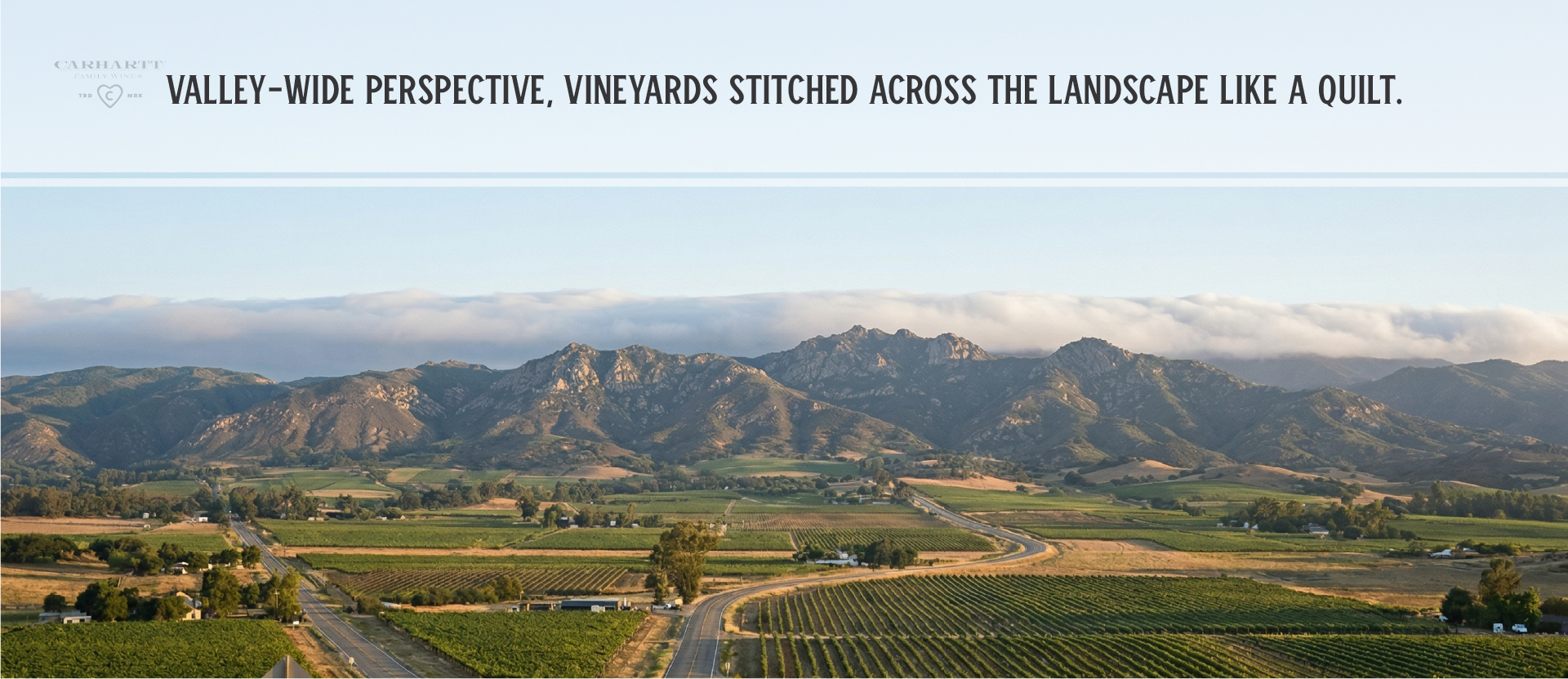
Ballard Canyon sits in a sweet spot close to Carhartt. It’s warm enough to ripen Rhône grapes properly, but it’s not a one-note heat zone. The days build depth. The afternoons bring wind. The nights cool down. That balance is why the wines can carry dark fruit and spice without turning heavy.
The Key Growing Condition That Shapes The Best Wines
Ballard Canyon’s best wines come from a very specific rhythm:
- Warm days that build flavor and depth
- Steady afternoon wind that keeps vines honest
- Cool nights that protect freshness and lift
That combination encourages completeness rather than extremes. You can get fully developed fruit, but you still keep acidity where it needs to be.
Soils matter just as much here. Ballard Canyon is dominated by heavier clay-based soils, often mixed with loam and marine sediments. Compared to soils closer to the coast, these hold more water, which supports even ripening and helps vines stay balanced through the season.

What The Wines Tend To Feel Like
When you taste Ballard Canyon, the first thing you usually notice is shape. These wines have a broader mid-palate than you’d find in cooler coastal areas, and they tend to feel grounded.
Common traits that show up again and again
- Real body without heaviness
- Firm but polished tannins
- Acidity that supports rather than cuts
- A sense of balance that feels intentional
Fruit often leans darker, especially in Syrah
- Blackberry
- Plum
- Blueberry
But the wines rarely feel like they’re only about fruit. What people latch onto is the spice and savory character
- Black pepper
- Dried herbs
- Olive
- Sometimes a subtle meaty or earthy note
The best Ballard Canyon wines feel layered. They have depth and spice, but they still hold lift.
The Grapes That Best Represent Ballard Canyon
If you want the clearest expression of Ballard Canyon, start with Syrah. It’s the most consistent and defining grape here, and it makes sense in this climate.
Why Syrah works so well
- Warm days ripen it fully, building dark fruit and savory depth
- Wind and cool nights preserve acidity and structure
- Clay-rich soils support a broad mid-palate and polished tannins
What you’ll often notice in Ballard Canyon Syrah
- Dark fruit plus peppery spice
- Earthy edges
- A grounded, confident structure
- Power that feels controlled rather than loud
Grenache and Mourvèdre are the next key players, both as single-variety wines and in Rhône-style blends.
Grenache
- Builds generous fruit and spice from the warmth
- Stays lifted and energetic when handled with restraint
Mourvèdre
- Needs heat to ripen, and Ballard Canyon gives just enough
- Brings structure, savory depth, and that earthy, meaty character people remember
On the white side, Viognier is the most natural fit and shows up most often.
Viognier
- Aromatic lift
- Stone fruit
- Texture without heaviness
You’ll also see smaller plantings of Roussanne and Grenache Blanc, which tend to bring more body and savory nuance than bright citrus. Sauvignon Blanc exists in limited amounts too, often with more mid-palate weight and herbal character than the sharper coastal versions.
The Soil Story In Plain Language
If I’m connecting soil to what you taste, I keep it simple.
Heavier soils lead to broader, firmer structure.
Most of Ballard Canyon is clay-rich. Clay holds water longer, which keeps vines from stressing too early and allows grapes to ripen more evenly. That steady ripening shows up in the wine as:
- Fuller mid-palates
- More grounded mouthfeel
- Tannins that feel present and supportive rather than drying
In practical terms, guests often describe Ballard Canyon wines as weighty but smooth. The structure is there, but it doesn’t feel sharp or angular.
The One Vineyard Decision That Changes Everything
If I had to pick one decision that most impacts final style here, it’s harvest timing.
Ballard Canyon sits right on the edge between richness and freshness. Pick date is what decides which side you land on.
If you pick a little earlier
- Acidity stays brighter
- Tannins stay tighter
- Spice and savory notes lead the conversation
If you wait longer
- Fruit goes darker
- The wine gains weight
- Structure softens
- You risk losing lift if you push too far
Canopy management, irrigation, crop load, they all matter. But in Ballard Canyon, harvest timing is where everything shows up in the glass.
Why I Feel Closely Tied To This Area
Our vineyard technically sits in the Los Olivos District AVA, but we’re very close to Ballard Canyon, and I’ve always felt a strong connection to it. I think of this broader region as home.
We’ve worked with Ballard Canyon fruit over the years, tasted countless wines from the area, and seen firsthand how much potential it has when it’s handled with care. Being close to it, geographically and philosophically, makes it feel like part of our extended backyard.
What I’m proud of with the work tied to Ballard Canyon is the restraint it asks for. This place can produce big wines without trying. The best examples come from knowing when to slow down and not push ripeness just because it’s available.
The quiet decisions are the whole story here
- Paying attention to balance instead of chasing size
- Managing water so vines stay steady
- Choosing a harvest window that keeps structure and freshness intact
- Letting spice, savory depth, and lift stay in the lead
When it’s done right, Ballard Canyon wines feel confident and complete without being loud. You can taste the intention, and you can taste the discipline. That’s the part I’m proud to be close to.
A Warm Way To Think About Ballard Canyon
If you love Rhône varieties and you want them to feel generous without turning heavy, Ballard Canyon is a place you’ll come back to. The wines tend to meet you with warmth and depth, then finish with structure and lift. It’s a style that works at the table, works in conversation, and feels grounded in the kind of decisions you only notice when you slow down and really taste