
Los Olivos
Los Olivos is small, walkable, and honestly, one of the easiest places to have an amazing wine day, as long as you don’t try to do too much. The biggest win is setting yourself up so you can stay present. When you’re not stressed about where to go next, you actually taste more, notice more, and enjoy the town the way it’s meant to be enjoyed.
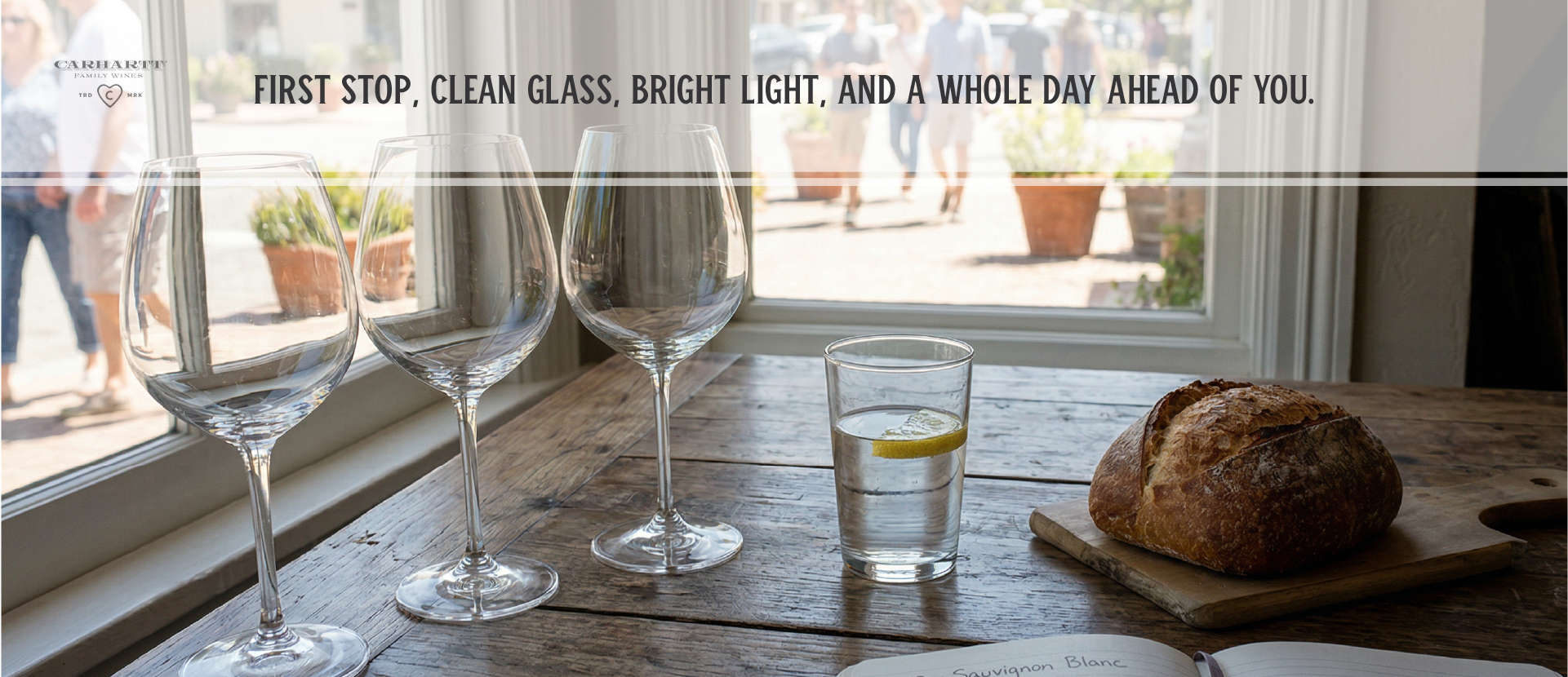
Picking Your First Stop Without Overthinking It
I wouldn’t start by trying to find “the best” tasting room. I’d start by trying to find the best first fit for you.
Here’s what I’d do before you even drive in
- Pull up Google reviews and skim for patterns, not perfection
- Click around on a few tasting room pages and see what they pour and what vibe they’re going for
- Make a short list of two to four spots you’d genuinely be excited to walk into
Then pick your first stop based on something simple
- You want a place that feels welcoming right away
- You want wines that match what you already like, or something you’re curious about
- You want to start the day in a space where you can ask questions without feeling rushed
Once you’re actually in Los Olivos, the best thing you can do is start with that first tasting room and then use locals as your guide. I mean that literally. Ask the person pouring, “Does my plan make sense?” or “Where would you go next if you were us?” People here are usually honest, and that little conversation tends to steer you toward a better day than any itinerary you build at home.
How Many Tastings Keeps It Fun
I’ll keep this simple: three tastings in an afternoon is perfect. Four is the absolute max, and even then, you’re flirting with palate fatigue.
Here’s why I’m picky about this. After three real tasting experiences, your palate starts to get tired, and once that happens, you’re not really tasting anymore. You’re just drinking. That can still be fun, but it’s a different kind of day.
So if you want the day to stay fun and still feel intentional
- Do three tastings
- After that, switch to something more casual
- Grab a glass of wine somewhere you like, or go sit down for food
That’s the move that keeps the whole afternoon feeling relaxed.
The Planning Mistake I See All The Time
People don’t make reservations. That’s the most common issue, and it usually hits on weekends and holiday stretches.
Los Olivos and the Santa Ynez Valley are small. There are a lot of places to taste, but there are only so many truly great ones. If you show up expecting the best spots to be wide open, you might get lucky, but you also might end up bouncing around, wasting time, and settling for whatever has space.
If you want to avoid that
- Make reservations for at least two tastings
- Make a lunch plan, even if it’s casual
- If you’re staying overnight, book lodging early on busy weekends
I’m all for a little spontaneity, but in a small town, spontaneity works better when you have a foundation.
What People Actually Enjoy Most In Los Olivos
This might surprise you, but I don’t think there’s one wine style that “wins” in Los Olivos. Wine is personal. Some people come in loving reds, some people have shifted toward whites, and a lot of people don’t have a strong preference, they just want a great day.
The most consistent thing people enjoy isn’t a grape or a style. It’s hospitality.
People want:
- To feel taken care of
- To have a real interaction with the person pouring
- To taste wine in a space that feels comfortable and welcoming
When that’s there, the wines land better, no matter what’s in the glass.
If You Tell Me You Like Reds But Nothing Too Heavy
If you said that to me across the bar, I’d say, “Perfect. You came to the right place.”
A lot of people still think California reds have to be big and heavy. That’s not the only lane, and it’s not the lane I’m most interested in.
Our style, and a lot of what people love around here, leans more restrained:
- Lower tannin
- Less ripe fruit
- Lower alcohol
- More nuance, more layering, more delicacy
I like intricacy over power. If Grenache is on the menu, that’s usually where I start someone who wants a red that stays light on its feet. It’s naturally lighter-bodied, it has good acidity, and it’s a great bridge for someone who loves Pinot Noir but wants to explore beyond it.
A “Starter Flight” That Helps You Feel Confident
Most tasting rooms aren’t set up like a wine bar where you’re building your own flight. You’re tasting what that winery is pouring. But if we’re talking about how to help someone new to wine feel confident, comparative tasting is the easiest way.
Instead of getting hung up on grape names, I’d focus on body and structure. You learn faster that way.
If you were tasting side-by-side in a flexible setting, I’d do something like:
For Reds
- Light-bodied: Pinot Noir
- Medium-bodied: Grenache
- Fuller-bodied: Cabernet Sauvignon
For Whites
- Light and bright: Sauvignon Blanc
- Medium-bodied: coastal Chardonnay
- Fuller-bodied: a richer Chardonnay or something like Roussanne
That simple “light, medium, full” framework does more for confidence than memorizing varietals. Once you know what weight you like, everything gets easier.
How To Taste Better Without Getting Nerdy About It
If you want three things you can notice every time, without using technical language, I’d go with:
- Aroma
- Acidity
- Sweetness
Aroma is the easiest entry point. You don’t need special words. If it smells like something familiar, that’s enough. Wine tasting is basically comparison, and your brain already knows how to do that.
Acidity is that mouthwatering, bright, refreshing feeling. Most people recognize it as soon as they’re paying attention.
Sweetness is also intuitive. Whether it’s actual residual sugar or just the perception of ripe fruit, people can tell if a wine feels sweet or dry.
Body and texture can feel confusing until you use a simple analogy. If you ignore flavor and just focus on feel, the difference between water and olive oil is obvious. That weight and viscosity is body. Once you lock onto that, you’ll start noticing it in every glass.
My Favorite Way To Compare Two Wines Back To Back
When you’re comparing wines, the trick is to use the same order every time so your brain doesn’t scatter.
Here’s my system
- Look: color, clarity, how it behaves when you swirl
- Smell: intensity, character, whether it feels youthful or more developed
- Taste: acidity, tannin, texture, length
When you repeat that pattern with each wine, the differences pop out. It becomes less overwhelming and a lot more intuitive.
Food, Breaks, And Keeping The Day Comfortable
If you want tastings to stay enjoyable, plan food in between. Not just because you need it, but because it resets your palate and keeps your energy steady.
My go-to
- Eat something light in between tastings, even if it’s just a snack
- Avoid anything overly rich, spicy, or aggressively seasoned mid-day
- Carry a simple snack so you’re not forced into a heavy meal at the wrong time
If you want easy pairing foods in town, I love keeping it simple:
- A good sandwich is hard to beat
- Pizza works well because it’s balanced and familiar
- A lighter seafood lunch can be great if you’re leaning into whites
The point is: food that supports the day, not food that steals the show.
What I Want You To Feel At Our Los Olivos Space
When you walk into our place, I want it to feel like one of the most unique tasting experiences you’ve ever had, but not in a stiff or showy way. More like: you walked into somewhere that gets you.
I want you to feel
- Comfortable
- Welcomed
- Free to ask questions
- Free to enjoy wine the way you actually enjoy it in real life
Premium wine can live in a space that feels like home. It can come with great music, a relaxed atmosphere, and an experience that empowers someone who’s brand new to wine and still feels special for someone who’s been collecting for years.